Quick Answers
How old is the Daintree Rainforest?
It is one of the oldest continuously surviving tropical rainforests. UNESCO describes this region as the largest part of Australasia where rainforest has persisted since Gondwanan times.
How big is the Daintree?
About 1,200 km², though definitions vary. It is part of a World Heritage area.
Who are the Traditional Owners?
The Kuku Yalanji people, who have lived here for tens of thousands of years.
Daintree Rainforest Facts
Why the Daintree is truly unique
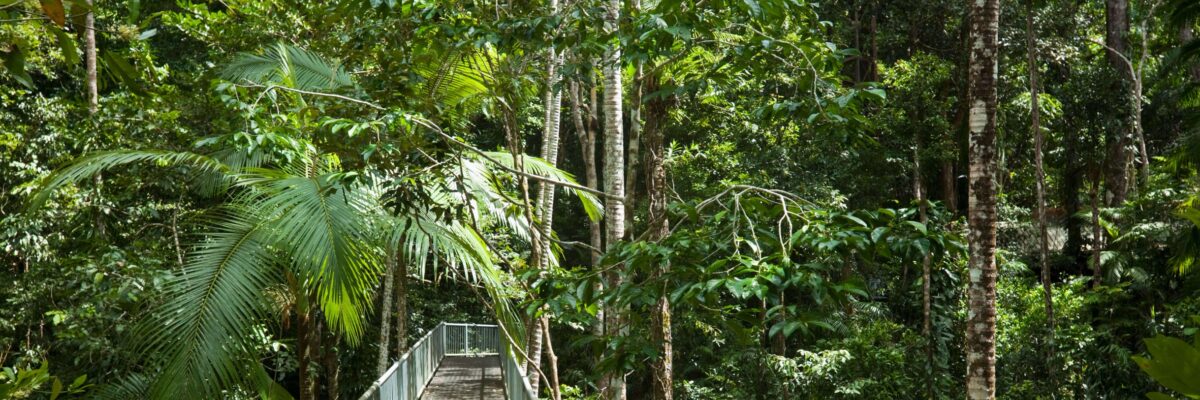
- The Daintree Rainforest is one of the world’s oldest continuously surviving tropical rainforests — UNESCO describes this region as the largest part of Australasia where rainforests have persisted continuously since Gondwanan times, the relicts of a forest that covered Australia and part of Antarctica 50 to 100 million years ago. It sits within the Wet Tropics of Queensland World Heritage area. Proudly protected for its incredible natural beauty and global significance.
- One of the most extraordinary things: here, rainforest meets reef. At places like Cape Tribulation the lush green rainforest runs right down to the sandy beach and the turquoise waters of the Great Barrier Reef.
- The rainforest is home to a staggering diversity of life: over 3,000 plant species, thousands of insect species, and a rich array of animals — many of which you won’t find anywhere else.
- It’s not just old it’s also big. The Daintree region spans an area of about 1,200 km² (though definitions vary) and covers an impressive portion of north-Queensland’s lush landscapes.
10 Fun Facts
-
You can walk through a forest whose lineage has grown here without a break since the age of Gondwana.
-
The Daintree is the only a place in the world where two World Heritage sites sit side by side. The rainforest and the Great Barrier Reef.
-
Over 65% of Australia’s bat and butterfly species. Around 30% of the country’s frog, marsupial and reptile species are found here.
-
The region has more tree species in one hectare than there are in the entire United Kingdom!
-
Some of the plants here are “living fossils” . Ancient lineages that date right back to when Australia was part of the land-mass Gondwana.
-
The Daintree Rainforest was named after Richard Daintree (1832-1878), an early Australian geologist and photographer.
-
The rainforest stretches from the Daintree River northwards and reaches to the coast and the Great Dividing Range offering dramatic changes in landscape, from lush canopy to shimmering sea.
-
Stay overnight under the canopy! There are eco-lodges, rainforest retreats and unique accommodation options tucked among the trees.
-
Aboriginal culture is deeply entwined with the land. The traditional custodians, the Kuku Yalanji people, have lived here for tens of thousands of years and share a rich heritage connected to this rainforest.
-
The rainforest is more than just beautiful — it plays a vital role in stabilising the environment. Supporting unique ecosystems and helping to regulate climate and water cycles in Tropical North Queensland.
What to Explore and Spot When You Visit
- Wildlife highlights. Keep your eyes peeled for the majestic Southern Cassowary (an ancient bird vital to seed dispersal in the rainforest), tree kangaroos, unique frogs and the dazzling blue-winged Ulysses butterfly.
- Plant wonders. Towering Bull Kauri trees, giant fan palms, ancient conifers and ferns — this is a world where the plant life is as fascinating as the animal life.
- Scenic contrasts. From dark green rainforest canopy to bright white sand beaches, from rivers winding through the forest to coral reefs offshore — the landscape variety is incredible.
- Cultural experiences. Join a guided walk by Kuku Yalanji elders, learn about bush-tucker, Dreamtime stories and the ways in which the land has been lived in for millennia.
- Adventures in nature. Explore boardwalks, go on river cruises (where you may spot crocodiles!). Take guided night walks, or simply immerse yourself in the tranquillity of the canopy.
Why Visitors Love the Daintree
- It’s authentic: You’re not just in a rainforest — you’re in a rainforest with millions of years of history, cultural depth and raw beauty.
- It’s accessible: From cities like Cairns or Port Douglas you can make your way into the Daintree region and feel like you’ve stepped into a world apart.
- It’s versatile: Whether you’re after a luxury eco-lodge, a family-friendly stay or a rugged rainforest adventure, the Daintree has you covered.
- It’s memorable: Few places offer the chance to walk under trees that pre-date the dinosaurs, then stroll onto a beach where rainforest meets reef.
A Few Friendly Tips for Your Visit
- Plan for weather: It’s tropical! Humidity, rain showers and lush conditions are part of the charm. Pack accordingly.
- Respect the land: The rainforest is fragile. Stick to marked tracks, keep a safe distance from wildlife and follow cultural protocols when visiting Indigenous sites.
- Drive with care: If you’re driving north of the Daintree River, you’ll encounter the car-ferry across the river and narrow rainforest roads — take it slow and enjoy the journey.
- Check access: Some roads or tracks may be affected by weather, so a little flexibility helps.
- Stay longer if you can: With so much to explore, even a two-night stay feels short. Give yourself time to soak in the atmosphere.
In Summary
The Daintree Rainforest is Australia at its wildest, oldest, and most beautiful. It’s a place where nature tells its story in leaves, birdsong, ancient trees and sweeping coastal views. This is not just a destination — it’s an experience you’ll remember.
Discover the Daintree Rainforest



Travel Kindly
At Hot Getaways, care is our compass — and a little kindness makes every journey better. When you visit the Daintree, we gently ask you to:
- Tread lightly in the rainforest — stay on the boardwalks and marked tracks to protect this ancient, fragile ecosystem.
- Respect the wildlife — never feed cassowaries or any animals, keep your distance, and take your rubbish home with you.
- Support local — choosing local operators, cafés and guides helps this beautiful place thrive.
- Honour Country — we travel on the traditional lands and sea Country of Australia’s First Peoples, with gratitude and respect to the Traditional Custodians past and present.
- Be kind to each other — a smile, a little patience and a helping hand make the day lovelier for everyone.
Small acts of care add up to something wonderful. Thank you for travelling kindly.