

Quick Answers
When is the best time to see wildlife?
Early morning and late afternoon, when most animals are active in the cooler part of the day.
Where are the best places to look?
Mossman Gorge, Jindalba and Dubuji boardwalks, Cape Tribulation, Thornton Beach and the Daintree River.
How can I see crocodiles safely?
On a guided Daintree River cruise.
“Here, the ancient and the living exist together. Step gently. Watch carefully. The Daintree’s wildlife has been perfecting its world since the age of Gondwana.”
Wildlife & Nature — A Living World Beyond Imagination
The Daintree is not just a rainforest. It is one of the world’s oldest continuously surviving tropical rainforests — a place where evolution has been quietly working since the age of Gondwana. Walking beneath its canopy, you sense immediately that you are somewhere profoundly different. This is a place where the Southern Cassowary still roams forest floors, where tree kangaroos sleep in the canopy above you, and where crocodiles patrol ancient river systems as they have done for millennia.
What Makes Daintree Wildlife Extraordinary
The Daintree Rainforest sits at the meeting point of two World Heritage Areas — the Wet Tropics and the Great Barrier Reef. This collision of ecosystems creates extraordinary biodiversity. More than 430 bird species, over 100 reptile species and dozens of mammals found nowhere else on Earth call this place home. Many are living descendants of Gondwana — the ancient supercontinent that existed before the land masses split apart. To encounter them here is to touch something genuinely ancient.
The Kuku Yalanji and Their Relationship with Country
The Kuku Yalanji people have lived within this country for tens of thousands of years. Their deep knowledge of the rainforest’s animals, plants and waterways is inseparable from its survival. When you visit, you are walking through living Kuku Yalanji Country. We encourage every visitor to seek out cultural experiences, listen to the stories of the land’s Traditional Custodians, and approach the forest with the same care and respect with which it has always been held.
Wildlife Encounters Worth Planning For
Whether it’s the flash of a Cairns Birdwing butterfly across a forest clearing, a cassowary stepping silently from the undergrowth, or a crocodile sliding from a mudbank at the Daintree River’s edge — the encounters here stay with you. Plan to spend time rather than rush. The forest reveals itself to those who slow down.
A Hot Getaways destination. Where Care is Our Compass.
Explore Visit Daintree Rainforest
Discover the Incredible Wildlife of the Daintree Rainforest
The Daintree Rainforest is one of the most biologically diverse ecosystems on Earth and is home to an extraordinary collection of wildlife found nowhere else in the world. From the ancient Southern Cassowary and elusive Bennett’s Tree Kangaroo to colourful butterflies, rare birds, reptiles and frogs, the Daintree offers visitors unforgettable wildlife encounters in one of Australia’s most remarkable natural environments.

Located in Tropical North Queensland, the World Heritage-listed Daintree Rainforest has evolved over millions of years and provides habitat for thousands of plant and animal species. Many of these species are considered living links to the ancient forests that once covered the supercontinent Gondwana.
Whether you’re exploring rainforest boardwalks, cruising along the Daintree River or visiting Cape Tribulation and Mossman Gorge, wildlife is never far away.
Why is the Daintree Rainforest Important for Wildlife?
The Daintree Rainforest is one of the world’s oldest continuously surviving tropical rainforests — UNESCO describes this region as the largest part of Australasia where rainforests have persisted continuously since Gondwanan times. Its unique climate, dense vegetation and varied habitats support an incredible diversity of life.
The region is home to:
-
- More than 430 bird species
- Over 100 reptile species
- More than 30 frog species
- Numerous mammals found only in Tropical North Queensland
- Thousands of insects and butterflies
- Rare and endangered wildlife species
The Daintree is often described as a living museum of evolution, preserving species that have survived for millions of years.
Iconic Daintree Rainforest Animals
Southern Cassowary
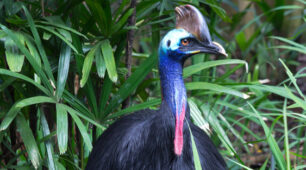
The Southern Cassowary is the most famous animal in the Daintree Rainforest and one of Australia’s most important birds.
Standing up to two metres tall, this flightless bird plays a vital role in rainforest health by spreading the seeds of hundreds of rainforest plants.
Visitors may encounter cassowaries around:
Learn more: Cassowary Guide
Bennett’s Tree Kangaroo
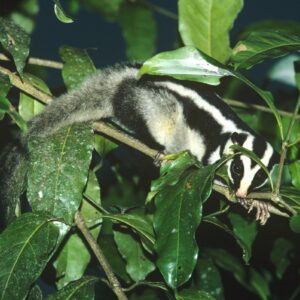
One of Australia’s most unique mammals, Bennett’s Tree Kangaroo spends much of its life high in the rainforest canopy.
Unlike ground-dwelling kangaroos, tree kangaroos have adapted to life in the trees with powerful limbs and exceptional climbing abilities.
Best areas for sightings include:
-
- Daintree Rainforest
- Cape Tribulatio
- Mossman Gorge region
Learn more: Bennett’s Tree Kangaroo
Crocodiles
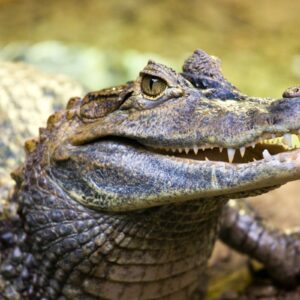
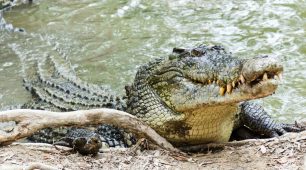
The Daintree River is one of Australia’s best places to observe estuarine crocodiles in the wild.
These ancient reptiles have inhabited the region for millions of years and can often be seen basking on riverbanks or swimming through mangrove habitats.
The best way to safely view crocodiles is on a guided Daintree River Cruise.
Learn more: Daintree Crocodiles
Boyd’s Forest Dragon
Boyd’s Forest Dragon is a fascinating rainforest reptile often seen clinging motionless to tree trunks.
Their excellent camouflage makes them difficult to spot, but patient visitors may find them along rainforest walks and boardwalks.
Learn more: Boyd’s Forest Dragon
Birds of the Daintree Rainforest
Birdwatchers from around the world visit the Daintree to see some of Australia’s rarest and most beautiful bird species.
Popular species include:
Victoria’s Riflebird
Known for its spectacular courtship display, the Victoria’s Riflebird is found only in the rainforests of Far North Queensland.
Azure Kingfisher
Often spotted along rivers and creeks.
Wompoo Fruit-Dove
One of Australia’s most colourful rainforest birds.
Great-billed Heron
Commonly seen along waterways and mangrove areas.
Southern Cassowary
The largest rainforest bird in Australia.
Reptiles of the Daintree
The warm tropical climate supports a rich variety of reptiles.
Species include:
-
- Amethystine Python
- Boyd’s Forest Dragon
- Frill-necked Lizard
- Eastern Water Dragon
- Estuarine Crocodile
The Green Tree Python is often linked with the Daintree, but in Australia it lives only on Cape York Peninsula, far to the north. The python you are most likely to see here is the Amethystine Python, Australia’s longest snake.
Learn more: Green Tree Python: why it is not a Daintree animal
Frogs of the Daintree
The rainforest comes alive after rain, when frogs begin calling throughout the forest.
Popular species include:
White-lipped Green Tree Frog
The largest tree frog in Australia.
Dainty Tree Frog
Often found near rainforest streams.
Northern Barred Frog
Common in wetter rainforest habitats.
Learn more: White-lipped Green Tree Frog
Butterflies and Insects
The Daintree is famous for its colourful butterflies and remarkable insect life.
Cairns Birdwing Butterfly
Australia’s largest butterfly and one of the most spectacular insects in the rainforest.
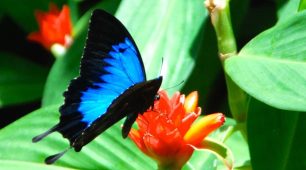
Ulysses Butterfly
Known for its brilliant electric-blue wings that flash through the rainforest canopy.
Learn more:
Best Places to See Wildlife in the Daintree
Some of the most rewarding wildlife viewing locations include:
Jindalba Boardwalk
Excellent for birds, reptiles and cassowaries.
Mossman Gorge
Popular for butterflies, birds and rainforest mammals.
Daintree River
Best location for crocodiles and waterbirds.
Cape Tribulation
A wildlife hotspot where rainforest meets reef.
Dubuji Boardwalk
Great for birdwatching and rainforest exploration.
Thornton Beach
Often visited by cassowaries and other rainforest wildlife.
Wildlife Watching Tips
To increase your chances of seeing wildlife:
-
- Explore early in the morning.
- Visit again during late afternoon.
- Walk quietly and patiently.
- Bring binoculars.
- Stay on designated tracks.
- Never feed wildlife.
- Respect wildlife and their habitat.
Many animals are shy and may take time to reveal themselves.
Protecting Daintree Wildlife
The Daintree Rainforest is one of Australia’s most important conservation areas. Visitors can help protect wildlife by:
-
- Staying on marked tracks.
- Driving carefully and watching for cassowaries.
- Taking all rubbish with them.
- Keeping a safe distance from animals.
- Supporting eco-friendly tourism operators.
Every visitor plays a role in helping preserve this extraordinary rainforest for future generations.
Explore More Wildlife Guides
Continue your wildlife adventure:
-
- Cassowary
- Bennett’s Tree Kangaroo
- Crocodile
- Boyd’s Forest Dragon
- Green Tree Python (Cape York)
- Victoria’s Riflebird
- Cairns Birdwing Butterfly
- Ulysses Butterfly
- White-lipped Green Tree Frog
Discover the incredible animals that make the Daintree Rainforest one of the world’s most remarkable wildlife destinations.
Frequently Asked Questions About Daintree Rainforest Animals
What animals live in the Daintree Rainforest?
What is the most famous animal in the Daintree Rainforest?
Are there crocodiles in the Daintree Rainforest?
Can you see cassowaries in the Daintree Rainforest?
Are there tree kangaroos in the Daintree?
Are there snakes in the Daintree Rainforest?
What is the best time to see wildlife in the Daintree?
Where are the best places to spot wildlife in the Daintree?
Are the animals in the Daintree Rainforest protected?
Why is the cassowary important to the Daintree Rainforest?
Places to See in the Daintree Rainforest

Travel Kindly
At Hot Getaways, care is our compass — and a little kindness makes every journey better. When you visit the Daintree, we gently ask you to:
- Tread lightly in the rainforest — stay on the boardwalks and marked tracks to protect this ancient, fragile ecosystem.
- Respect the wildlife — never feed cassowaries or any animals, keep your distance, and take your rubbish home with you.
- Support local — choosing local operators, cafés and guides helps this beautiful place thrive.
- Honour Country — we travel on the traditional lands and sea Country of Australia’s First Peoples, with gratitude and respect to the Traditional Custodians past and present.
- Be kind to each other — a smile, a little patience and a helping hand make the day lovelier for everyone.
Small acts of care add up to something wonderful. Thank you for travelling kindly.